

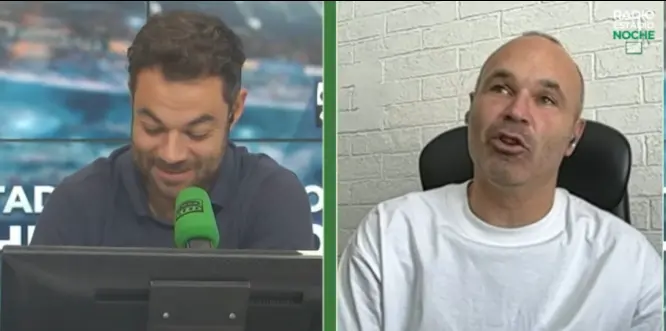
As a legendary midfielder in Barcelona's history, Andrés Iniesta has now stepped into the managerial arena, taking charge as the head coach of Gulf United. In an interview with Onda Cero, Iniesta opened up on a wide range of topics.
On the lifestyle changes after becoming a manager
Once you become a coach, you have virtually zero control over the future; you simply do not know whether a project will last six months, a year, or even less. On a family level, I really deliberate carefully because we are a big family with five children (the oldest is 15, the second is 11, followed by three younger ones). Every single decision must align with the practical realities of our household, as the children are also growing up with their own dreams and lives. Sometimes I do not even dare look too far ahead.
On what motivated him to pursue coaching
It is largely born out of passion. I genuinely enjoy passing down the experiences I went through to younger players—not merely tactical systems or on-pitch positioning, but more importantly, how to navigate and manage emotions during critical junctures such as halftime or after the final whistle. These are priceless assets gathered inside our backpacks through our lived experiences as players, lessons you cannot learn from any coaching course manual.
On his battle with depression
I always speak about this topic with the utmost respect, because tragically, some people never manage to emerge from that dark tunnel. When I chose to seek help from a psychologist back then, it wasn't because I clearly understood I was suffering from depression; rather, it was out of a sheer survival instinct. I felt like I was dying inside and could see no exit ahead—it was a pure cry for help. Fortunately, the entire process of confronting it and recovering made me immensely stronger, and I am grateful to have ultimately overcome it.
I never intended to make it public for any specific purpose. I merely recounted it objectively as a genuine chapter that took place in my life and career, discussing it just as naturally as I would the trophies I have won. However, I feel deeply grateful when many people enduring similar despair tell me that hearing my story helped them realize they are not alone, giving them the courage to take that first step toward seeking psychological support. For anyone trapped in that darkness, what is often needed most is simply to be heard, and to know that "others have walked this path and conquered it too."