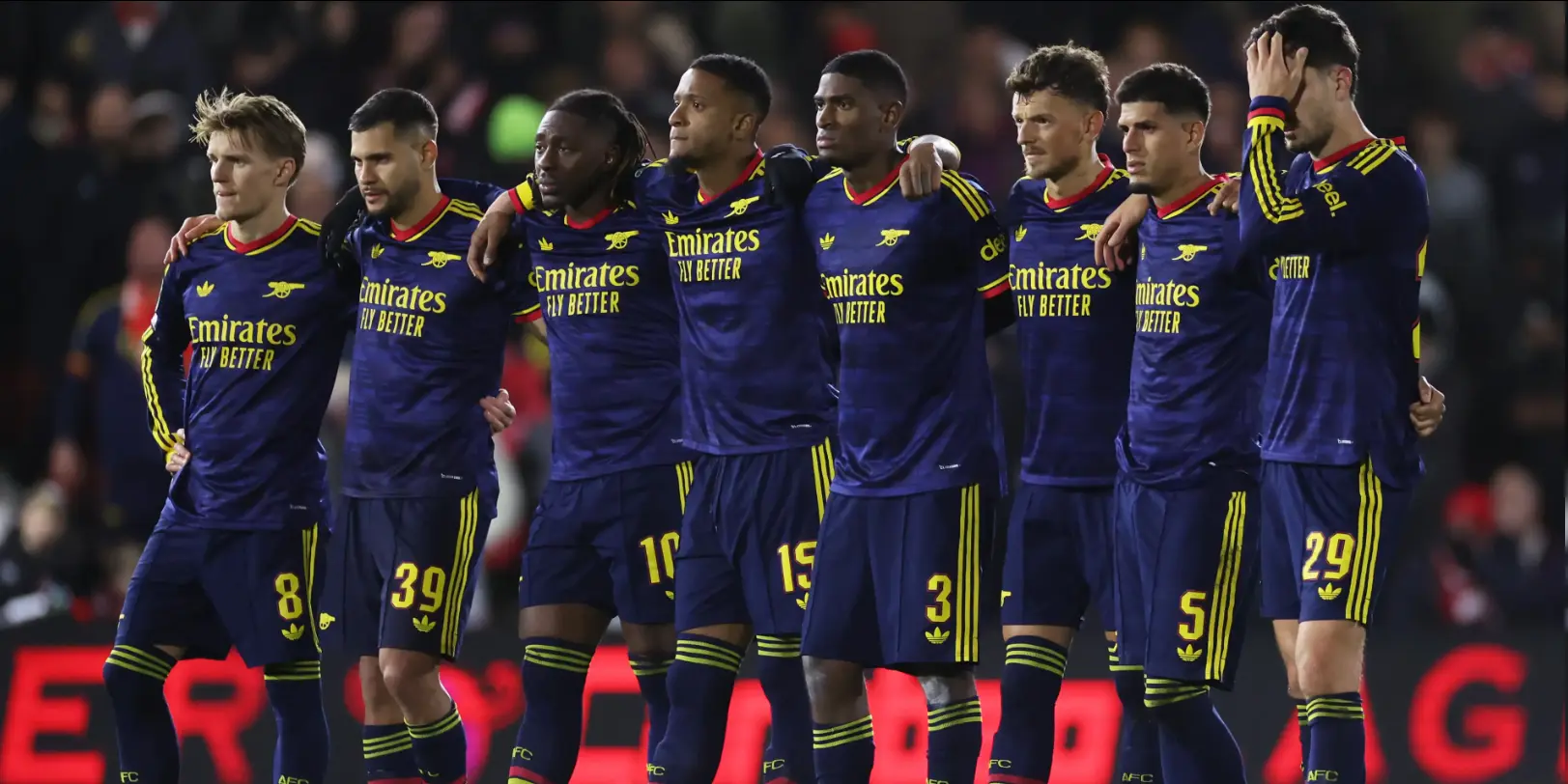


The marquee clash between Liverpool and Arsenal produced multiple refereeing controversies, which former Premier League referee Graham Scott broke down individually in his "Ask the Ref" column, focusing primarily on topics including the shirt-pulling on Alexander Isak inside the penalty area, simulation by players, Bradley Barcola's yellow card, and the threshold comparison between two ferocious tackles.
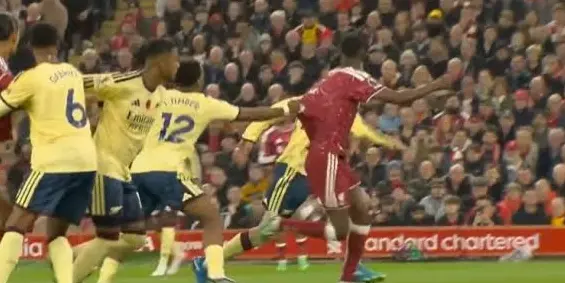
The most heatedly debated moment of the round occurred in the 20th minute of the first half, when Arsenal defender Jurrien Timber pulled Isak's shirt inside the penalty box, but referee Andy Madley did not award a penalty, and VAR upheld the on-field decision upon review. Many supporters raised questions: since shirt-pulling is ostensibly an objective offense, why is there elasticity in the officiating standards?
Graham explained that the Laws of the Game stipulate any holding offense can be penalized with a direct free kick, or a penalty kick if inside the penalty box. However, the Premier League's guidance for referees adds assessment dimensions, focusing on whether the action materially impacts a player's ability to play or challenge for the ball. Referees need to evaluate across four criteria: whether the player's eyes are solely focused on the opponent without touching the ball, whether there is no intent to challenge for the ball, whether the hold is sustained and has an impact, and whether both arms are used to hold.
Looking back at this incident, Timber's attention was indeed fixed on Isak without attempting to play the ball, but the crucial factor is whether Isak's movement and ability to play the ball were clearly hindered. On the pitch, Isak himself did not appeal, nearby teammates merely showed slight disappointment, Liverpool manager Andoni Iraola's protests were rather subdued, and studio commentators did not immediately deem it an obvious offense either.
Graham stated that slow-motion replays magnify the action and post-match reviews amplify controversy, but the on-pitch referee had an optimal viewing angle; when nobody on the pitch raised a strong objection, VAR will not dissect frames repeatedly to force an intervention and disrupt the flow of the game. He added that had a foul been awarded on this play, Timber would have been sent off with a red card for denying an obvious goal-scoring opportunity.
Some readers voiced concerns that not awarding a penalty in this instance might encourage more simulation among players. Graham believes that Isak barely felt a noticeable pull at that moment, which was why he played on. Even if a player intentionally goes to ground, theatrical traces are easily identified by referees, making it even harder to earn a penalty.